
Australia’s gambling influencer restrictions start on 1 January 2027, putting creator sponsorships and affiliate arrangements under review. ACMA’s announcement of 19 October 2026 explains the upcoming restrictions on using public figures in wagering advertising.
Yes, affiliate deals can be at risk. Affiliates need to assess both the promotion and its payment terms. Separate restrictions on customer-activity-related commissions mean a campaign review must go beyond who appears on screen.
Key takeaways for affiliates
Review Australian wagering campaigns scheduled to run from January 2027.
A small following does not automatically put a creator outside the rules.
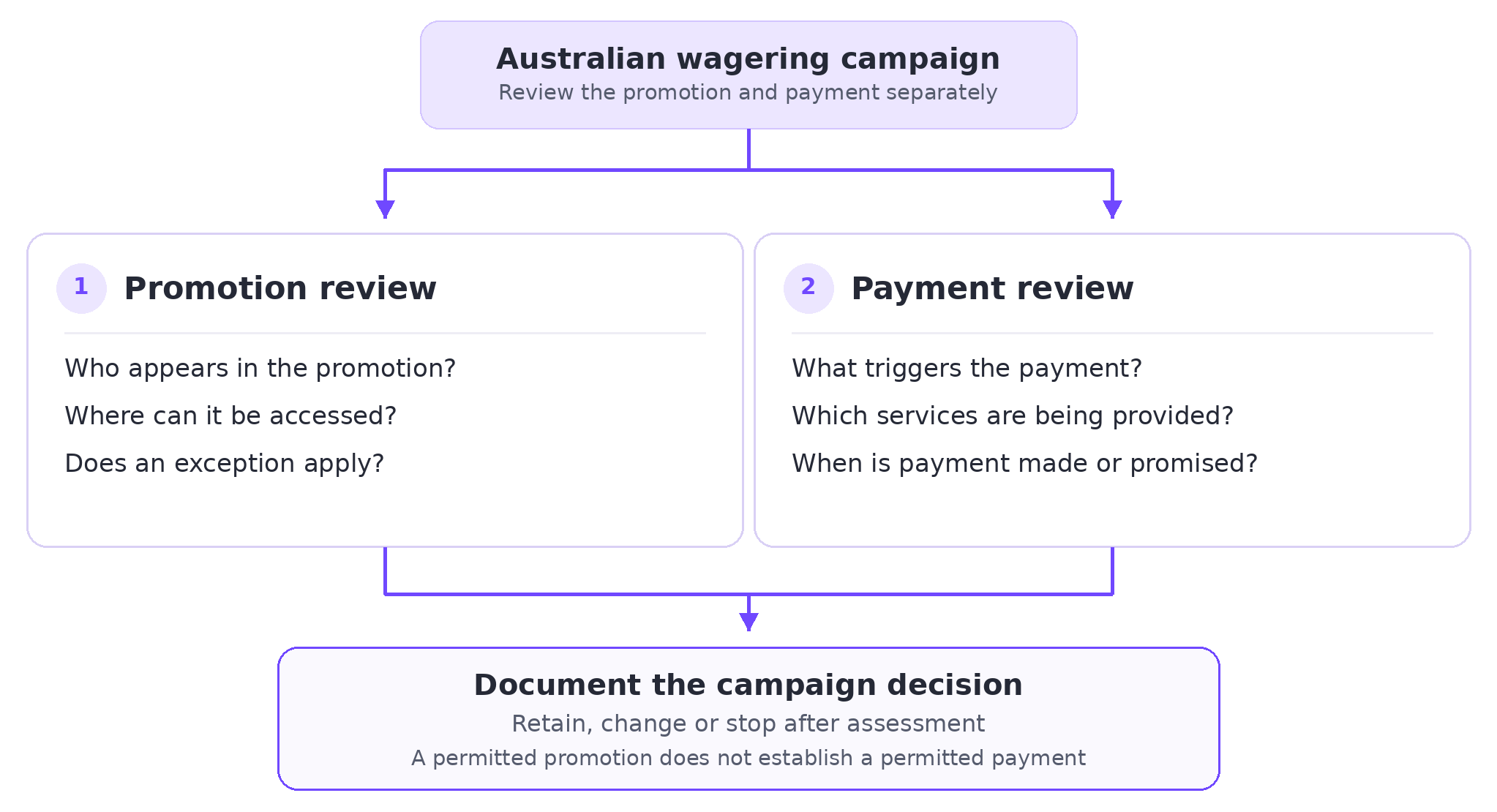
Assess sponsorship content and affiliate payment triggers separately.
Check existing content and contracts before assuming they can continue.
What changes on 1 January 2027?
Licensed interactive wagering providers will be prohibited from entering arrangements involving a notable person promoting wagering advertising content in Australia. Operators must also avoid causing or authorising covered advertising featuring such people. The restrictions extend across broadcast and online channels, including social media, news websites and online games, according to ACMA’s announcement.
The Gambling Reform Act received Royal Assent on 26 August 2026. These are enacted changes with a future start date. ACMA’s October publication provides initial guidance on their operation.
For affiliates, the planning question is immediate: which January campaigns depend on a creator’s identity, reputation or personal endorsement?
Who counts as a notable person?
The definition covers current and former professional athletes, celebrities, social media influencers and prominent individuals. Leaving professional sport or stepping away from an influencer career does not automatically remove someone from scope.
ACMA’s industry guidance sets no minimum follower count. Recognition within a niche community can matter. A streamer with a modest audience should therefore seek a campaign-specific assessment.
Under this particular prohibition, ACMA places the obligations on the licensed wagering provider. Creators still face commercial exposure if operators withdraw sponsorships, stop using content or change campaign plans.
How could sponsorships and social promotions affect affiliate income?
A sponsored stream, personal endorsement or recurring branded segment can combine several income sources: a placement fee, referral payments and continuing commissions. Review each component separately.
Paynura’s editorial assessment: losing a creator placement could reduce referral visits, registrations and first-time deposits. Replacing that traffic could require new production work or acquisition spending. The outcome will depend on the affiliate’s audience and campaign mix; no revenue loss percentage can be established from the rule alone.
Start by separating Australian wagering income from other markets in your reporting. Then identify which earnings depend on creator appearances, continuing promotional content or customer activity. This produces a useful exposure estimate without assuming every contract has the same outcome.
CPA and RevShare need a separate review
ACMA’s reform overview identifies a separate ban on commissions to staff or affiliates based on customer activity.
Section 62ZT covers specified service relationships involving customer acquisition, retention, reactivation, management or referrals. Section 62ZL defines commission broadly, including referral fees and revenue share; customer activity includes account creation, deposits and bets. The legislation applies the restriction to commissions provided, offered or promised from commencement.
That makes the payment trigger a necessary part of any Australian sportsbook affiliate review. A CPA tied to a qualifying registration or deposit, a RevShare arrangement and both components of a Hybrid deal need assessment against the statutory conditions.
Changing a creator sponsorship to a referral deal is therefore insufficient without reviewing both rules. A fixed fee also requires a content review when a public figure promotes wagering.
Paynura’s Revenue Share guide explains the general model. Australian eligibility must be assessed separately.
Existing contracts, overseas creators and racing
For existing agreements, distinguish the contract date from continued advertising use. Schedule 5 applies the new-contract prohibition to arrangements entered from commencement, while the content provision applies to content provided from that date. An earlier signature alone does not protect ongoing advertising. See the Act’s application provisions.
Overseas creators also need review: the definition covers people outside Australia, and online access by Australian users can matter. ACMA explains these boundaries in its guidance.
The guidance describes a racing exception requiring both qualifying racing content and a dedicated racing program, channel or online service. Adding racing commentary to a general sports stream is insufficient to establish that exception.
What should affiliates check before January?
Use this as a practical review list with the operator and its legal or compliance team.
Review area | Question to resolve |
|---|---|
Creator and content | Does the campaign rely on a person covered by the definition? |
Payment triggers | What event earns each fee or commission, and is that arrangement permitted? |
Existing material | Which videos, clips, pinned posts and landing pages need review? |
Contract terms | Who handles withdrawal, replacement content and termination costs? |
Outstanding payments | How will accrued amounts and future payments be treated? |
Campaign ownership | Who records the assessment and implements required changes? |
Prioritise campaigns already booked for January and agreements due for renewal. Keep written decisions with the relevant creative assets and contract version. Put unresolved launches on hold while the assessment is completed.
When comparing alternatives, check the destination market’s rules, operator permissions and traffic conditions. Paynura’s GEO guide provides a framework for market selection.
Frequently asked questions
Can affiliates keep commissions from players referred before January 2027?
Do not assume earlier referrals protect future payments. The commission application provision focuses on provision, offer or promise from commencement. Ask for an assessment of the payment timing, underlying arrangement and statutory conditions before relying on continuing income.
Are website publishers automatically exempt?
No. A publisher should review both promotional content and payment terms. A campaign without a creator appearance still needs assessment against the separate commission restriction and other applicable advertising requirements.
Can creators switch to offshore casino promotions?
That is not a compliant fallback for Australian audiences. ACMA’s Interactive Gambling Act overview states that prohibited services, including online casinos and sports betting services without an Australian licence, must not be advertised in Australia.
Does the racing exception protect affiliate commissions too?
The exception discussed here concerns the notable-person advertising provision. It does not establish permission for a customer-activity-related commission. Review the promotion and remuneration independently.
Choose your next affiliate deal with a clearer view
Before renewing an Australian wagering arrangement, resolve who can promote, where the content will appear and what triggers payment. Use that assessment to decide which campaigns to retain, change or stop.
Paynura is a B2B iGaming affiliate network connecting affiliates with sportsbook, casino, poker and eWallet opportunities. If you are reviewing your traffic strategy, bring your audience countries, channels and preferred deal structure to the discussion.
Become a Paynura partner to discuss relevant opportunities and their market and traffic requirements. Each offer remains subject to applicable rules and partner terms.